Key takeaways
- Robots climb by aiming pump thrust at the wall: the water jet pins them while tracks or wheels walk them upward.
- A successful climb needs four things at once: strong flow, clean filters, healthy tread and brushes, and water above roughly 55-60F.
- Slick surfaces like fiberglass gelcoat and glass tile demand rubber brushes and fresh tread, while gunite gives traction away for free.
- When a robot stops climbing, the cause is almost always a packed filter, worn parts, or cold water, in that order.
How does a 20-pound machine drive straight up a vertical wall, underwater, and stay there?
Short answer: it vacuums itself to the surface. A pool robot angles its pump exhaust so the jet of water leaving the machine presses it against the wall, and its drive system then walks it upward while the brushes keep the body from skating sideways. No magnets, no suction cups, just directed water flow.
That same trick is why wall climbing is the first ability a robot loses when something goes wrong. Below is the physics in plain English, how grip changes from tile to pebble, and why a robot that climbed beautifully in June can be sliding backward by October.
The physics: thrust holds it, tread moves it
On the floor, a robot’s pump pulls water in through belly intakes and fires it out the top. That exhaust jet pushes the machine down, planting it so the treads can grip.
On a wall, the same geometry rotates 90 degrees. The exhaust now fires away from the wall, and the reaction force pins the robot to the surface with several pounds of push.
Because the machine is nearly weightless underwater, that modest force is enough. Out of the pool the same robot weighs 20-plus pounds, but buoyancy cancels most of that once it is submerged, so the pump’s push does not need to be huge.
The tracks convert grip into motion, and spinning brushes at the leading edge scrub the surface while adding a little extra bite. Watch closely during a climb and you can see the exhaust plume angling away from the wall, doing the quiet work of holding everything in place.
Four things every climb needs at once
Wall grip is a chain with four links, and the robot peels off the wall when any single one fails.
- Strong pump flow, meaning a clean impeller and clean media passing water at full rate
- Traction, meaning brushes and tread with enough material left to bite
- Water warmer than roughly 55-60F so the rubber parts stay flexible
- A surface the tread can actually hold, which varies more than most owners expect
Notice that two of the four have nothing to do with the robot’s quality. Plenty of healthy machines get blamed for cold water every fall.
And some machines never climb at all: floor-only budget models and most above-ground units skip the wall geometry by design, so check the spec sheet before judging the robot.
Grip by surface: tile to pebble
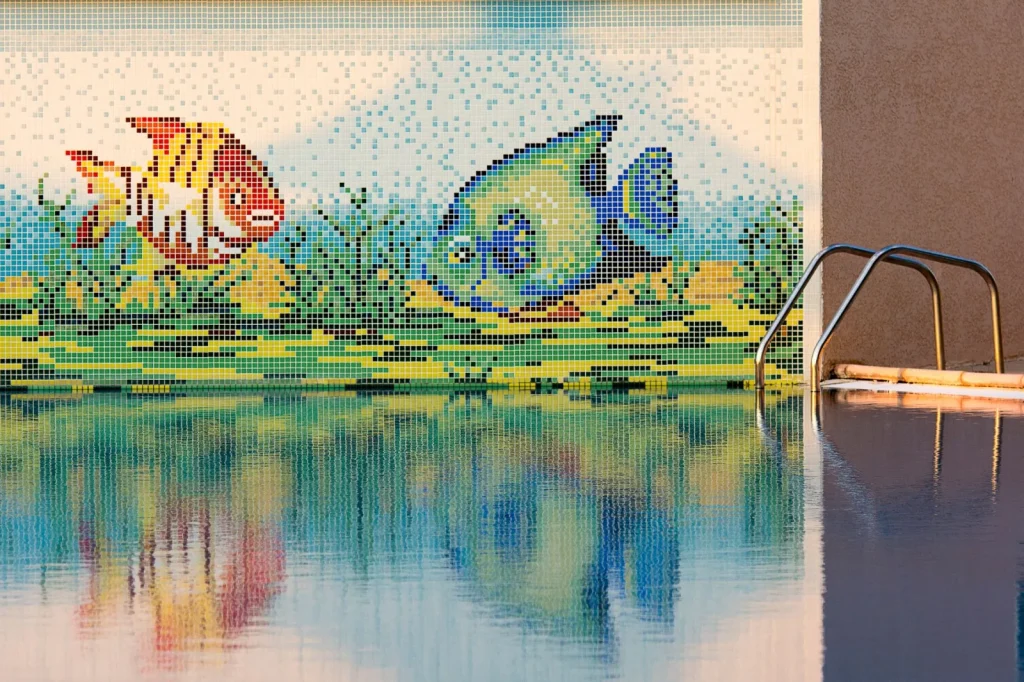
Pool surfaces sit on a spectrum from grippy to greasy, and the same robot behaves differently on each one.
| Surface | How it grips | What helps |
|---|---|---|
| Vinyl liner | Decent hold when clean, but the wall flexes underfoot | Soft PVC or combo brushes, gentle climb behavior |
| Fiberglass | Slick gelcoat, the most common slip complaint I hear | Rubber brushes and fresh tread |
| Tile and glass tile | Slickest of all, especially near the waterline | Rubber brushes, slower climb modes |
| Gunite and plaster | Naturally grippy, traction almost for free | Any healthy brush, expect faster brush wear |
| Pebble finish | Grippy but bumpy enough to disturb the hold | Aggressive tread and strong pump flow |
Rough surfaces trade one problem for another. Gunite and plaster hand out traction freely but sand down brushes and tread noticeably faster, so a grip problem there usually means parts are overdue.
The fiberglass pool that taught me about tread
A rental property I serviced had a fiberglass shell with gelcoat so smooth it squeaked. The owner’s robot, two seasons old, climbed the shallow-end walls fine but slid back down the deep end slope on every pass, and he was ready to replace the whole machine.
The fix cost less than dinner. His PVC brushes had gone shiny and hard, so we fitted a rubber set and changed nothing else. On the next cycle the robot rode to the waterline on all four walls and held there like it was showing off.
The lesson stuck: on slick surfaces, the last stretch of brush life is worth nothing. Replace early on fiberglass and glass tile and you skip the whole mystery.
Why a robot that used to climb starts sliding
When a wall climber turns into a floor crawler, the cause list is short, and it runs in a reliable order.
- Packed filters. The top cause by a mile. Blinded media chokes flow, flow creates the holding force, and the robot lets go mid-climb.
- Worn parts. Bristles ground short and tread polished to a glaze stop biting, and slick surfaces show it first.
- Cold water. Below about 55-60F most machines refuse walls entirely, with no fault involved.
- A slimed wall. Early algae film works like a lubricant; if the tile feels slippery to your hand, it feels slippery to the robot.
- An aging pump motor. After five or six seasons output fades, and the wall is the first place weak suction shows.
Every October at the pool store we fielded a wave of calls that began with the words “my robot quit climbing.” Nine out of ten traced back to cold water or dirty filter panels, and the fix cost nothing.
The ten-minute grip check
Safety first
Unplug the power supply before you flip the robot over or put a finger anywhere near the intake. An impeller that kicks on unexpectedly can cut skin, and live connectors and wet hands never mix.
Run this sequence before assuming anything is broken:
- Rinse every filter surface until the water runs clear, then hold the media up to the sun. If little light passes through, deep clean it or swap it.
- Inspect the brushes for flattened bristles or a hardened feel, and the tracks and wheels for shine, stretch, or a loose fit.
- Spin the impeller gently with a gloved finger and feel for hair or mulch wrapped behind the grate.
- Check the water temperature with a thermometer, not the calendar.
- Wipe a wall patch at arm’s depth. If it feels slick, brush the walls and test your sanitizer before blaming the machine.
Then run a wall cycle and watch the first two climbs from a chair. You will usually see the answer.
Fixes that actually restore the climb
If the check pointed at media, wash it or replace it. A fresh set of filter panels runs about $30-60 and instantly restores flow on most machines.
Brushes and tread are consumables too, typically $25-70 a set and a screwdriver-level swap. On a fiberglass or tile pool, switching from hard PVC to rubber brushes fixes more slipping than any other single change I have made on test units.
If flow still feels weak with new media and a clean impeller, the pump motor itself is fading. On a machine past its sixth season, that becomes a genuine repair or replace decision, because motor work often costs a few hundred dollars against the price of a new unit.
Pro tip
Photograph new brushes and tread the day you install them. A season later, comparing the parts against the photo makes wear obvious in a way memory never is.
Keeping the climb all season
Treat the wall as your robot’s health gauge. A machine that storms to the waterline has strong flow, sound parts, and a clear water path, all confirmed in one glance from your deck chair.
Rinse the media after every run, glance at the brushes monthly, expect lazy walls in cold water, and keep a spare filter set on the shelf. Machines that get that treatment, like the Dolphin Premier and Polaris VRX iQ+ units I have followed in customer pools for years, still charge up walls in their seventh season.
For a closer look at a related issue, see Pool Robot Suction Power: GPH Numbers Decoded.
Frequently asked questions
Do all robotic pool cleaners climb walls?
No. Floor-only models exist at the budget end and for above-ground pools, where soft or corrugated walls make climbing pointless. Wall and waterline coverage generally starts in the mid-range, around $500-900, and the box or spec sheet will say so plainly. If wall cleaning matters to you, confirm it before buying rather than assuming every robot does it.
Why does my robot climb one wall but ignore the others?
Usually it is the cycle budget, not favoritism. Many robots allot a set number of wall climbs per cycle and start from wherever they were dropped in, so distant walls get fewer visits. Vary your drop-in point, run longer cycles, and check whether return jets are pushing the machine off course. Curved or sloped wall sections also get skipped more than flat ones.
Can wall climbing damage a vinyl liner?
A healthy robot with soft brushes will not hurt a liner in good shape. The risk shows up with old, brittle vinyl, loose wrinkles that can snag a track, and metal parts exposed by worn brushes. On an aging vinyl liner, run floor-only mode, keep brushes fresh, and inspect the machine for burrs before each season.
How steep a slope can a robot handle before it slips?
The floor-to-wall cove and hopper slopes in deep ends are the honest test. Most healthy machines with good tread manage them fine, since the same thrust that holds them on vertical walls works on angles. Slipping on slopes before walls is an early warning: it means flow or traction is fading, and the full wall failure usually follows within weeks.
Should the robot climb all the way out of the water?
No, and it physically cannot. The pump needs water to generate the thrust that holds the robot up, so as the machine breaks the surface it loses grip by design. Quality units ride that line on purpose, poking the top edge out to scrub the waterline before easing back down. Full exits you see in ads are staged or momentary.

Krisha Gupta
Krisha Gupta is a home-technology writer who spends most of her weekends knee-deep in pools, testing the latest robotic cleaners so readers don't have to. Her reviews are hands-on and jargon-free, focused on what a robot actually does when you leave it running unsupervised for eight hours. When she's not comparing brush patterns or waterline scrubbing, she's writing plain-English maintenance guides for pool owners who'd rather swim than tinker.


