Key takeaways
- Remote control and spot cleaning are built for one job: reaching a specific, visible mess faster than the next scheduled cycle would.
- Expect a real lag of half a second to a couple of seconds between a tap and the robot responding, longer underwater or on a weak connection.
- Manual driving uses battery pack runtime less efficiently than an autonomous cycle, so long chase sessions can cost more power than they save time.
- Corded robots often respond faster to manual commands because control travels down the cable instead of through open-water radio.
- A full autonomous cycle beats manual steering for any debris that is spread out rather than piled in one visible spot.
Your daughter’s birthday party starts in twenty minutes and a fistful of tortilla chips just went into the shallow end. The scheduled cycle is not due until tomorrow morning, and waiting is not an option with a dozen eight-year-olds about to cannonball into that exact spot.
This is the one scenario remote control was actually built for. Open the app, switch to manual or spot mode, and steer the robot straight to the mess instead of hoping the next autonomous cycle finds it eventually.
It is also close to the only scenario. Most of what a joystick promises on the box, real-time control, precision cleaning, video-game responsiveness, does not survive contact with an actual pool. Here is what remote control really does, where the lag comes from, and when spot mode beats waiting for a full cycle.
What remote control mode actually is
Underneath the joystick icon is a simple swap: instead of the robot’s onboard software choosing direction and speed, your taps do. Push forward, it drives forward. Release, it stops or drifts, depending on the model. That is the entire mechanism, no more sophisticated than steering a bath toy from a slightly smarter remote.
Spot clean mode is a step down in complexity from full manual driving. You tap a location on the app’s rendered map, or hold a directional button for a few seconds, and the robot runs a short, concentrated pass over that area rather than a full lap of the pool.
Both modes exist for the same reason: getting the robot to a specific spot faster than its normal coverage pattern would.
Neither mode gives the robot new intelligence. It simply steps aside and lets you replace its usual decision-making for a few minutes, then hands control back the moment you stop tapping or the session times out.
The lag you should actually expect
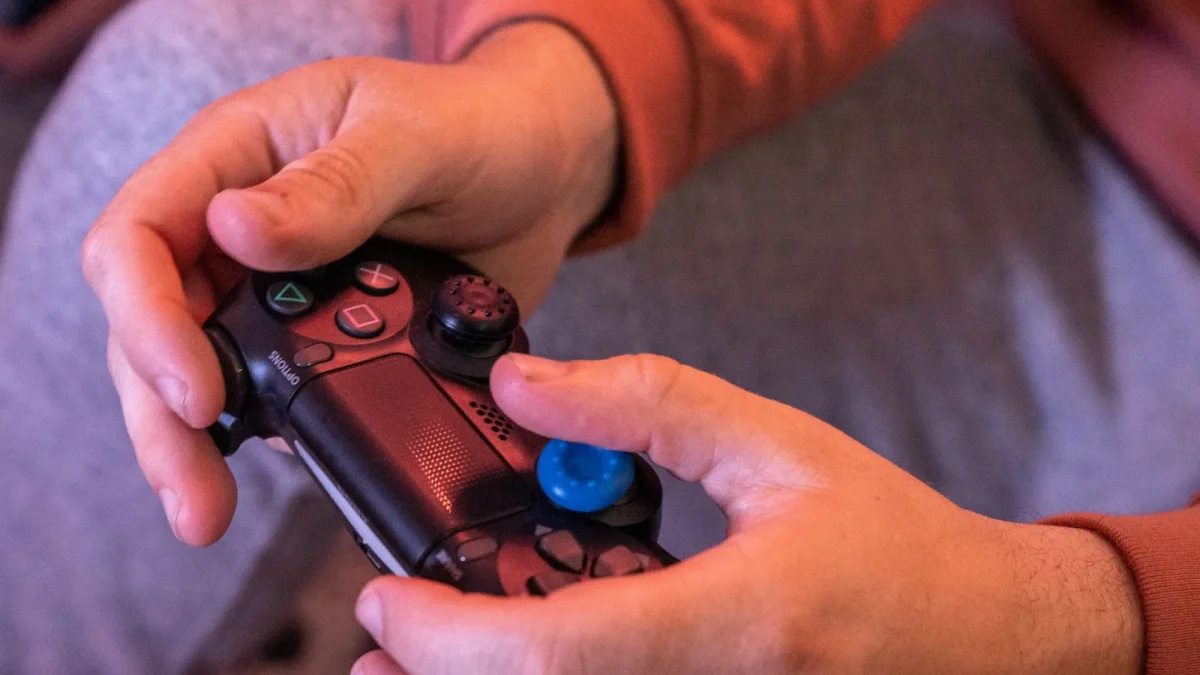
Commands travel from your phone, through Bluetooth or Wi-Fi, to the robot’s onboard receiver, and that trip is not instant. Expect somewhere around half a second to a couple of seconds between a tap and the robot responding, longer if the connection is marginal.
That is a world away from a video game controller. A drive motor also takes a moment to spin up from a stop, so short taps translate into a gentle drift rather than the crisp stop-start of steering a toy car on dry land.
Watch out
Steering gets noticeably worse the deeper the robot sits. Radio signals fade fast underwater, so manual control works best with the robot at or near the surface, not chasing a leaf along the deep end floor eight feet down.
Corded models have an advantage here worth knowing. On a machine like the Polaris VRX iQ+, commands travel down the cable to a deck-side control unit rather than through open-water radio, so response feels a beat quicker and steadier than on a cordless robot relying on Bluetooth alone.
What the box promises versus what physics allows
Marketing copy for premium robots loves phrases like precision control and live steering, paired with a photo of a smiling owner aiming the robot at a leaf. The photo is real. The experience behind it is choppier than it looks in a thirty-second ad.
Water is the reason. It absorbs radio signals aggressively, so a robot working the deep end is effectively out of reach no matter how good the app’s screenshots look. Manual control really only works at or near the surface, a narrower window than most buyers picture before they own one.

Where spot cleaning earns its keep
Four situations consistently justify grabbing the controls instead of waiting:
- A fresh spill, chips, a dropped cracker, grass clippings tracked in on someone’s feet.
- A stubborn corner the robot’s coverage pattern keeps skipping between full cycles.
- A pre-party touch-up when the scheduled cycle already ran and a few leaves blew in since.
- A small, isolated debris pile you can see clearly from the deck and steer to directly.
Notice what these have in common: a visible, specific target and a short window of time. Remote control is a scalpel, not a scrub brush. I have driven a robot straight at a bag of tortilla chips more times than I can count over nine seasons of service calls, and it is still the single most common reason anyone opens manual mode at all.

Where a full cycle still wins
Manual driving loses badly the moment debris is spread out rather than piled in one spot. A full autonomous cycle systematically covers the entire floor and walls in 1.5 to 3 hours without your attention; steering by hand to cover the same ground would take longer, tire your thumbs, and still miss the strips a proper coverage pattern would have caught.
Battery pack economics matter too. On a cordless robot, manual driving pulls power the same way autonomous cleaning does, but without the efficient routing, so five minutes of joystick chasing can eat runtime a full cycle would have spent covering ten times the area.
| Situation | Better tool | Why |
|---|---|---|
| Fresh spill, visible and isolated | Spot clean or manual | Faster than waiting for the next cycle |
| General daily debris | Full autonomous cycle | Systematic coverage beats manual steering |
| One stubborn corner | Spot clean, a few times | Targets the exact miss without a full re-run |
| Pre-party touch-up | Manual or a quick mode cycle | Depends how spread out the mess already is |
Driving one without frustration
Stand where you can actually see the robot and the debris at the same time, not squinting at a tiny map rendering from across the yard. Short taps beat holding the control down; the drift after each tap covers more ground than it looks like it should.
Aim slightly ahead of where debris sits rather than directly at it. Between the lag and the drift, the robot usually arrives a beat after your tap lands.
- Get within sight of the robot before switching to manual mode
- Use short taps, not held-down directional presses
- Aim a little ahead of the target, not straight at it
- Return to a normal cycle or dock once the spot is clear
The mistake that burns a battery for nothing
The classic manual-mode mistake is chasing a single leaf across a large pool with a cordless robot, watching the battery indicator drop the whole time. A leaf that drifts thirty feet in open water can out-pace a robot’s manual top speed, and by the time you catch it, you have spent real runtime on one piece of debris a normal cycle would have caught anyway.
The second version of the same mistake is trying to steer a submerged robot from across the yard on a weak connection. Commands queue, nothing happens for a few seconds, the owner assumes the robot is broken and mashes the controls harder, and the lag just gets worse as the app fights a losing signal.
Both fixes are the same: get close, keep the robot near the surface, and accept that remote control is a short, deliberate tool, not a leash you hold for the length of a swim.
Know when to grab the stick
Manual control and spot cleaning are worth having for exactly the situations they were built for: a fresh spill, a stubborn corner, the ten minutes before guests arrive. Outside of that, the scheduled cycle covers more ground, uses less power, and asks nothing of you at all.
Reach for the joystick when you can see the mess and the robot at the same time, keep sessions short, and let the autonomous cycle handle everything else. That is the whole decision, and it rarely takes more than a glance at the water to make it.
None of this makes remote control a wasted feature. It makes it a specific one, and a specific tool used for exactly the right five minutes earns its place far more than a flashy one opened once and forgotten.
Frequently asked questions
Can I steer a pool robot with a real video-game controller instead of the app?
A small number of premium models support pairing a Bluetooth game controller for a steadier feel than on-screen arrows, but most robots stick to the app's own joystick control with no external hardware option. Check your specific model's manual before buying a controller on the assumption it will work; support is inconsistent across brands and often limited to flagship tiers.
Does remote control drain the battery faster than a normal cycle?
Yes, noticeably. Manual driving pulls power the same way autonomous cleaning does but without the efficient routing a coverage pattern provides, so a few minutes of chasing debris by hand can use runtime that a full cycle would have spent covering far more floor. Keep manual sessions short and switch back to a normal cycle once the spot is clear.
Can I use remote control while the robot is in the deep end?
Poorly, if at all. Radio signals fade fast underwater, so commands sent to a robot several feet down in the deep end arrive late or not at all. Manual control works best with the robot at or near the surface. If it has already settled on the bottom of the deep end, let the current or next scheduled cycle handle that area instead.
Do corded robots offer better remote control than cordless ones?
Often, yes, on models where the connection runs down the power cable to a deck-side control unit instead of through open-water radio. That wired path tends to feel quicker and steadier than Bluetooth control on a cordless robot. It is a small but real advantage of corded designs that rarely gets mentioned next to their longer cable and lack of portability.
Is there a time limit on manual or spot clean mode?
Most apps do not enforce a hard time limit, but the battery pack and your own patience both impose a practical one. Cordless robots simply run down faster under manual control than under autonomous cleaning, and most owners find five minutes of steering is already more than a spill or a stubborn corner actually needs.

Krisha Gupta
Krisha Gupta is a home-technology writer who spends most of her weekends knee-deep in pools, testing the latest robotic cleaners so readers don't have to. Her reviews are hands-on and jargon-free, focused on what a robot actually does when you leave it running unsupervised for eight hours. When she's not comparing brush patterns or waterline scrubbing, she's writing plain-English maintenance guides for pool owners who'd rather swim than tinker.


