
Key takeaways
- A robot parked in the pool soaks in chemicals many times longer than it actually cleans.
- Sun ages shells and cables about as fast as chlorine ages seals, so shade is half the job.
- The best home is a caddy in a shed or covered corner, with the cord hung in wide loops.
- A three minute rinse and park routine after each run doubles as early wear detection.
The most convenient place to park a pool robot is the pool. Drop it in on Sunday, lift it out when the basket needs emptying, let the machine live where it works. Half the owners I have ever talked to do some version of this.
It is also the fastest way to age one. Water is the robot’s workplace, not its home, and every owner’s manual in the industry quietly says so on the storage page.
Give it an address on dry land and the same machine simply lasts longer. Here is what the water and the sun are doing while the robot sits, and what a good address looks like.
What the pool does to a parked robot
A robot resting on the floor is soaking, not swimming. Three cleans a week at a two hour cycle time is six hours of work; left in around the clock, the machine soaks for the other 162.
Chlorinated water never stops working on rubber and plastic. Seal lips harden, brush material stiffens, colors bleach, and the swivel cord jacket takes on a permanent curl. None of it is dramatic on any single day, which is exactly why the habit survives.
“It lives in the shallow end. It is a pool robot, the pool is right there in the name.”
That was my neighbor, two summers before his seal kit, a brush set, and a faded shell all came due in the same month.
Good to know
Most manuals tell you outright to remove the robot when it is not cleaning, and some brands note that permanent immersion can complicate a warranty claim. The instruction hides on the storage page, never in the marketing.
There is a people problem too. A parked corded robot leaves 50 feet of cable on the floor of a pool that children swim in, and poolside electricity deserves more respect than that; the Electrical Safety Foundation’s pool safety pages are a five minute read on why.
Sunlight is the second aging accelerant
Owners who do pull the robot out often park it in full sun on the deck, which trades one problem for another. Ultraviolet light snaps polymer chains at the surface of plastics, a process called UV degradation, and you can watch it happen across a season: glossy shells chalk, blue fades toward gray, cable jackets stiffen and crack.
Heat rides along with the light. A dark shell on baking pavers reaches temperatures that soften adhesives, and on cordless models the onboard pack cooks a little more every sunny afternoon it spends out there.
Shade is half of storage done right, and it is free.
The anatomy of a good parking spot
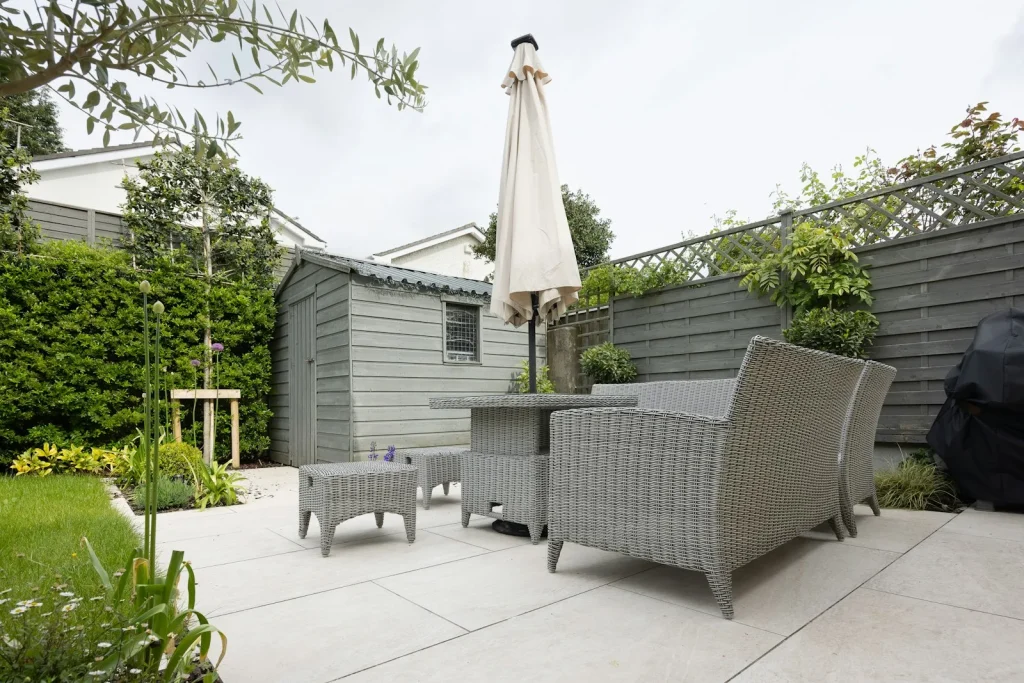
The ideal home is boring. It sits in shade, it breathes, it is close enough to the water that laziness never wins, and it gives drips somewhere to go.
- Shade, from a roof, a shelf, or the north side of anything; direct sun is the enemy.
- Air flow, so the robot dries between runs instead of mildewing under a wrap.
- Drainage, meaning a surface where a quart of drip water causes no trouble.
- Reach, within cable distance of the covered GFCI outlet you already use, with the power supply mounted high and dry beside it.
A shelf in the pool shed, the corner of a covered patio, a garage wall hook by the door: all three pass. The bottom of the pool and the middle of the lawn do not.
Distance matters more than it seems. If the good spot is a hike, the robot ends up living on the deck by August, so pick the compliant spot closest to the water and your cleaning schedule will survive human nature.
Caddies, hooks, and how the cord should hang
A caddy is the difference between storage that happens and storage you keep meaning to do. Machines in the Dolphin Premier and Polaris VRX iQ+ class often include one, and third party carts run $60-120 for everything else.
Park the robot on the caddy tray on its tracks, never dangling from its cable, and never resting on its brushes for days at a time. Soft brush material takes a set under the machine’s weight and thumps against the floor until it rounds out again.
Drape the cord in wide loops over the caddy’s hooks or a pair of wall hooks a forearm apart. Tight coils around a handle are how memory loops form, and memory loops are tomorrow’s cord tangling forty minutes into a clean.
The three minute exit routine
The routine that feeds the good parking spot takes three minutes and doubles as an inspection.
- Switch off, then lift the robot by its handle, never the cable, and let it stream out over the water for ten seconds.
- Pop the filter basket, dump it in a garden bed or bin, and hose the media until water passes freely.
- Rinse the whole shell with fresh water, non negotiable after a saltwater pool session.
- Roll it home, hang the cord wide, and leave the power supply switched off.
The inspection part comes free. Hands on the machine twice a week means you spot brush wear, a nicked cable, or a fogged housing months before the owner whose robot lives on the pool floor spots anything.
Rating the usual parking spots
Every yard offers the same four options, and they are not close.
| Parking spot | A season later | Verdict |
|---|---|---|
| In the pool, around the clock | Seals and brushes aging on triple time, bleached shell, cable underfoot for swimmers | Never |
| Open deck, full sun | Chalked plastic, stiff cracking cable jacket, cooked battery on cordless models | Days only |
| Covered patio shelf | Dry, shaded, drips drain away harmlessly | Good |
| Caddy in a shed or garage | Stable temperature, wide cord hangs, machine stays within inspection reach | Best |
If the caddy option means the robot sits 80 feet from the water, take the covered patio instead. The best spot on paper loses to the good spot you will actually use.
Give the robot a permanent address
Pick the spot once and the habit runs itself: shaded, breathing, drained, in reach of the outlet, with the cord hung wide and the power supply up off the ground.
One boundary worth naming: all of this is the swim season routine. Winter is a separate project with its own drying and temperature rules, so when the water goes cold for good, switch playbooks rather than promoting the shelf.
The robot that goes home after work is the one still climbing walls in season six. Three minutes at the waterline, a dry address, and the machine you bought stays the machine you own.
Frequently asked questions
Will one night in the pool hurt anything?
No. A robot that finishes a late cycle and comes out with your morning coffee is living a fine life. The damage curve belongs to weeks and months of continuous soaking, not hours. Treat overnight stays as the exception that proves you have a routine, and get the machine back to its shelf the next day.
Is a tarp over the robot on the deck good enough?
Better than bare sun, worse than it looks. A tarp blocks UV but traps heat and moisture against a wet machine, and mildew loves that arrangement. If fabric is your only option, drape it loosely once the robot has drained, and treat the setup as a stopgap while you clear space on a real shelf.
How far from the water should the power supply be?
Manuals commonly call for keeping the supply at least 10-12 feet back from the water's edge, mounted up off the ground, plugged into a GFCI protected outlet, and out of sprinkler reach. Follow your model's number if it differs. The robot can live closer than that; the electronics feeding it should not.
Do the filters need to dry out completely between runs?
No. In season, a rinse and a drip dry are plenty, and media that stays slightly damp between Tuesday and Friday comes to no harm in open air. What breeds trouble is sealing damp filters inside a closed box or compartment. Give everything one full drying day whenever a longer gap comes up.
Does rain matter for a robot stored outside?
Rain is the least of its problems. Fresh water falling on a machine built to swim does little, provided it can drain and dry afterward. Sun, trapped heat, and a power supply getting wet are the actual hazards. Keep the electronics dry and shaded, and a rained on robot is just a rinsed robot.

Krisha Gupta
Krisha Gupta is a home-technology writer who spends most of her weekends knee-deep in pools, testing the latest robotic cleaners so readers don't have to. Her reviews are hands-on and jargon-free, focused on what a robot actually does when you leave it running unsupervised for eight hours. When she's not comparing brush patterns or waterline scrubbing, she's writing plain-English maintenance guides for pool owners who'd rather swim than tinker.


