
Key takeaways
- A robot that floats instead of sinking almost always has trapped air, not a broken part.
- Tilting and slowly submerging the robot lets trapped air escape in under a minute in most cases.
- A first-dive routine after any new setup or reassembly prevents most floating complaints entirely.
- Waterlogged foam floats on the cord cause the opposite problem: a cord that sinks and drags instead of a robot that floats.
- A robot that floats high and feels heavier, not lighter, likely has water intrusion rather than trapped air.
You lower the robot in at the shallow end, press start, and instead of dropping to the floor the way it always has, it just sits there on top of the water. Cord trailing, motor humming, going absolutely nowhere, bobbing like an oversized bath toy.
The first cordless robot I ever unboxed for testing did exactly this, and for about ten minutes I was convinced I had a defective unit in my hands. I did not. I had trapped air, and trapped air is the single most common reason a healthy robot refuses to sink.
Before you touch a screwdriver or dial support, it helps to understand the physics working against you, because the fix falls out of it almost by itself.
The physics behind a robot that will not sink
Every submerged object experiences buoyancy, an upward push equal to the weight of the water it displaces, a principle explained cleanly on the Wikipedia page on buoyancy if you want the full version. A robot is engineered to be very slightly negative: heavier than the water it displaces once every internal cavity is fully purged of air, so gravity wins by a small, deliberate margin.
Engineers keep that margin small on purpose. A few ounces of negative buoyancy is enough to make a robot sink reliably without needing an oversized drive motor to fight the water on every pass, and without making the unit awkward to lift out by hand.
Trapped air changes that math instantly. A single pocket of air in the body, the filter housing, or the intake channel adds enough upward push to tip a robot that should sink by a few ounces into one that floats by a few ounces, and a few ounces is all buoyancy needs to win the argument.
This is also why the fix rarely involves tools. You are not repairing anything broken. You are releasing air that should never have stayed inside in the first place.
Where air hides on a new or freshly serviced robot
Brand new robots are the most common patients, since a sealed unit shipped dry has every internal channel full of ordinary air until water finally displaces it during that first clean. The same thing happens after you open the housing for a filter replacement, a brush swap, or a winter storage teardown and reassembly.
A reader once wrote in convinced her brand new robot was defective because it floated on three straight attempts right out of the box. It turned out to be nothing more than factory air still trapped in the motor block from assembly, and one proper burp solved it before her return window even opened.
Intake channels, the filter housing itself, and seams around the motor block are the usual hiding spots. None of that means a seal failed. It just means air had nowhere to go until you put the machine back in the water.
The burp technique that clears it in under a minute
Hold the robot at an angle rather than dropping it in flat, intake facing down and one corner tipped lower than the others, and lower it into the water slowly. You are giving trapped air a clear path up and out instead of sealing it into a pocket.
Watch for a stream of bubbles breaking the surface, usually from a seam or the intake itself. Tilt the robot through two or three different angles, pause a few seconds at each, and let gravity and water pressure do the work for you.
Pro tip
If bubbles stop but the robot still floats, gently rock it side to side while it stays fully submerged instead of pulling it back out. Fishing it out and starting over just invites a fresh pocket of air on the next attempt.
Most robots sink within thirty seconds of a proper burp. If yours is still floating after several angles and a full minute, move on to the checks further down rather than repeating the same tilt forever.
A first-dive routine that prevents the problem entirely
Skip the drama altogether by never just dropping a new or freshly reassembled robot into the deep end and walking away.
- Lower the robot in by hand at a slight angle, do not release yet
- Hold it fully submerged for 15 to 20 seconds, watching for bubbles
- Rock it gently through two or three angles while still holding it
- Release only once bubbles stop and it holds its depth on its own
- Watch the first thirty seconds of travel before you walk away
That routine takes less time than reading this section, and it turns a first clean that could start with a frustrating float into one that starts working immediately instead.
The opposite problem, foam that sinks when it should float
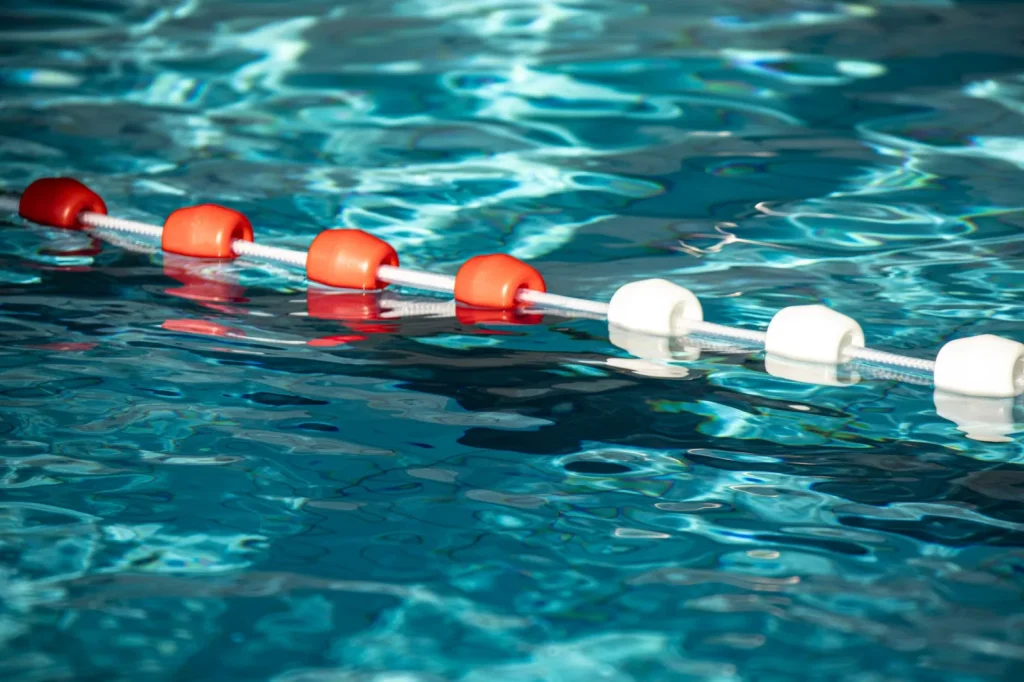
Here is the twist almost nobody expects. The small foam floats clipped along a corded robot’s cable exist to keep the cord itself buoyant, holding it up and out of the robot’s path instead of dragging on the floor. When those floats age and take on water, the cord sinks instead, and a sinking cord drags across the pool floor, snags on fittings, and can even pull the robot off course mid wall climbing pass.
The tell is different from a floating robot. The robot itself sinks and cleans normally, but the cable lies flat along the bottom instead of arcing above the working area, and you will feel the extra drag through the cable in your own hand.
Aging foam cord floats are a cheap swap, usually a clip on part costing very little, and far less expensive than the swivel cord or full cable assembly that eventually pays for a drag problem left ignored too long.

When a float setting or ballast is the real cause
A few models, including some configurations of the Aiper Scuba S1, ship with small adjustable weights or float elements that fine tune how aggressively the unit hugs the floor versus commits to wall climbing. Moving one during a filter service or a curious afternoon of tinkering can leave the robot noticeably lighter than it left the factory.
Check your manual for whether your model has anything adjustable at all before you assume a mystery fault. Plenty of robots, including most Dolphin Nautilus CC Plus units, have no owner adjustable buoyancy anywhere on the chassis, which rules this cause out in about ten seconds.
When floating means something got in, not air
Watch out
A robot that floats higher than usual, feels heavier when you lift it out, or shows visible water inside a clear housing panel is a different problem entirely: water intrusion rather than trapped air. Do not keep burping a unit that feels waterlogged. Dry it out and have it inspected instead.
Trapped air makes a robot too light. Water where it does not belong makes a robot behave strangely in other ways too, often heavier and less stable rather than simply floating on the surface. If your symptom does not match a clean float on the surface picture, treat it as a separate question rather than forcing the burp technique to fix something else entirely.
Getting your robot to sink and stay there
Buoyancy problems are some of the least expensive scares in this hobby. Tilt, burp, rock, release, and most robots sink within a minute and stay there for the rest of the season.
Build the first dive routine into every new robot, every reassembly, and every spring startup, and you will likely never watch one bob on the surface again. The physics is simple once you see it: a little trapped air, a little patience releasing it, and gravity finishes the job it was always going to win anyway.
Frequently asked questions
Is it safe to leave a floating robot in the pool while I figure out the fix?
For a short while, yes, it will not damage the robot to sit on the surface. Just do not leave it there for days, since a floating unit is not cleaning and its cord can drift into the path of ladders or a pump intake. Try the burp technique the same day rather than assuming it will fix itself overnight.
Can cold water make a robot float when it never did before?
Cold water alone rarely causes floating, since buoyancy depends on trapped air and water weight, not temperature. What sometimes coincides with cold water is a robot fresh out of winter storage, reassembled after a battery or filter service, which is exactly when trapped air sneaks in. Blame the reassembly, not the temperature, and run the burp technique.
Will shaking or flipping the robot underwater to release air damage it?
Gentle tilting and rocking while the unit stays submerged is exactly the recommended technique and will not hurt it. What you want to avoid is yanking it by the cord, dropping it hard onto a pool floor or steps, or forcing the housing open to chase air manually. Slow angles and patience clear air just as well as force, without the risk.
How long should I try the burp technique before trying something else?
Give it about a minute of tilting through a few different angles. Most robots sink within the first thirty seconds once air finds a path out. If a full minute passes with no change in bubbles or depth, stop repeating the same motion and check for a float setting, a ballast weight, or genuine water intrusion instead.
Does a floating robot mean the housing has cracked and water is getting in?
Usually the opposite. A cracked housing that is genuinely taking on water tends to make a robot sit heavier and lower, not float higher. A robot floating high on the surface almost always means trapped air, not a leak. Water intrusion shows up as extra weight, dampness inside a clear panel, or unusual heaviness when you lift it out.

Krisha Gupta
Krisha Gupta is a home-technology writer who spends most of her weekends knee-deep in pools, testing the latest robotic cleaners so readers don't have to. Her reviews are hands-on and jargon-free, focused on what a robot actually does when you leave it running unsupervised for eight hours. When she's not comparing brush patterns or waterline scrubbing, she's writing plain-English maintenance guides for pool owners who'd rather swim than tinker.


