Key takeaways
- Residential saltwater pools run far below ocean salinity, and most robots are rated for up to about 4,000-5,000 ppm.
- Skipping the freshwater rinse after a swim, not the salt itself, is the actual cause of most corrosion damage.
- Charging pins, cable connectors, and motor shaft seals are the specific points where salt residue does its damage.
- A full rinse takes under a minute and should happen every time the robot comes out of a salt pool.
- Warranty claims on salt damage usually hinge on documented salinity levels and whether care instructions were followed.
The myth lands on my counter every spring, usually from someone holding a warranty slip for a robot that barely lasted one season: salt water pools eat robotic cleaners alive, so you either pay extra for a special saltwater model or skip the robot altogether.
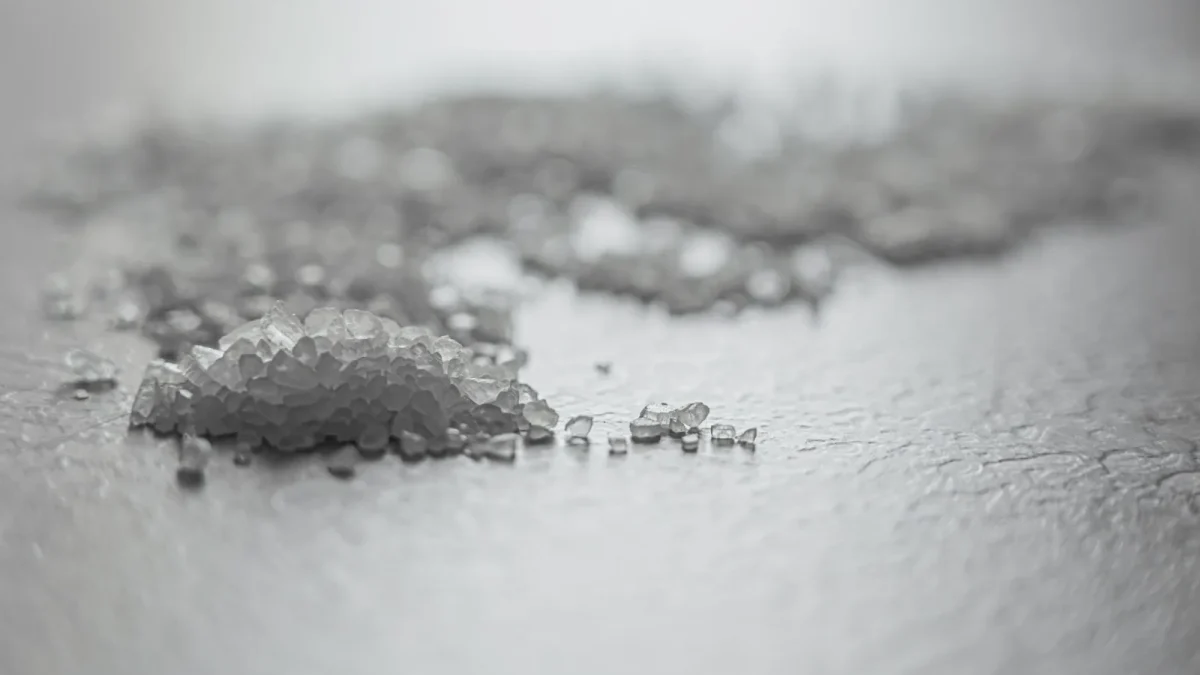
Here is the actual number. Ocean water runs around 35,000 ppm of dissolved salt. A residential saltwater pool, generated by a chlorinator most owners forget exists once it is dialed in, sits closer to 3,000-3,500 ppm. That is roughly a tenth of what a robot would face at the beach.
Most robots sold today are built to handle that concentration without drama, often rated well past it. The machines that fail early almost always share one habit, and it has nothing to do with the salt cell. The owner never rinses the robot after it comes out of the water.
How mild your salt pool really is
A salt chlorine generator does not make your pool salty in any dramatic sense. It runs pool water across a cell that converts dissolved salt into chlorine through electrolysis, then repeats the process on a loop. The salt itself just sits there as the raw material.
Manufacturers set target ranges for a reason: enough salt to keep the generator working, not so much that it tastes noticeable or stresses hardware. Most systems land in that 3,000-3,500 ppm window mentioned above, occasionally drifting toward 4,000 on an older cell.
Compare that against a robot’s rated ceiling, and the gap is generous.
| Water type | Approximate salinity | What it means for a robot |
|---|---|---|
| Ocean water | About 35,000 ppm | Far beyond any residential pool or robot rating |
| Typical salt pool | 3,000-3,500 ppm | Well inside most manuals’ rated range |
| Robot manual ceiling | 4,000-5,000 ppm | Rarely reached unless a cell is miscalibrated |
| Freshwater or chlorine pool | Near 0 ppm | No salinity concern, rinse habits still matter |
The physical process behind that damage ceiling is ordinary corrosion, the same slow electrochemical reaction that eats a bike chain left out in the rain. Dissolved salt speeds it up, but it needs one more ingredient to do real harm: standing moisture that never dries.
Where salt residue actually attacks the hardware
I’ve pulled the housing off more than one robot where the charging pins had gone from bright brass to a dull green crust, the rest of the machine otherwise spotless. That crust does not form underwater. It forms after, while salt film sits and dries on exposed metal.
Four spots take the brunt of it: charging pins on a cordless dock, the connector pins at a corded cable’s plug end, the motor shaft seal where a spinning shaft meets a stationary housing, and the small steel screws holding panels together.
None of those spots are underwater mysteries. They are the same points that would eventually show wear in a freshwater pool too, just on a slower clock. Salt does not invent new failure points, it just turns up the speed on the ones already there.
Rubber tracks, brush rollers, and plastic housings could not care less about salt concentration; they are the parts sitting outside this whole conversation. It is only bare or lightly plated metal that keeps score.
A robot’s battery cells and control board live in sealed compartments precisely because engineers assumed water, salty or not, would eventually find its way to the outside of the case.
The real killer: skipping the rinse
Two robots came through my shop the same month a few years back, same brand, same age, both pulled from salt pools. One belonged to a customer who rinsed it every single time, out of habit more than diligence. The other belonged to a customer who stored it wet in a caddy and called that good enough.
The rinsed unit looked like it had done maybe half a season of work. Clean contacts, smooth track pins, a shaft seal that still turned freely. The other one had track pins seized solid with crust, and the charging contacts needed scraping clean with a fiberglass pen before the robot would even take a charge. Seized pins do not just look bad, they cost a robot its wall grip the next time it tries to climb.
That second repair ran close to $120 in parts and labor. The habit that would have prevented it costs nothing and takes under a minute.
Neither owner noticed anything wrong for months. Corrosion at this scale is quiet, a little duller each week, until one morning the robot simply will not spin up.
Pro tip
Pull the robot out, tip it to drain the housing, then run the hose over the tracks and brush rollers for thirty seconds. Give the connector or charging pins a direct spray too, and let everything air dry in the shade before it goes back in the caddy.
Skip that step for a whole season and salt film builds in layers nobody notices until something stops moving freely.
Checking your number against the manual’s ceiling
Test strips made for salt systems read in the thousands of ppm, a different scale than the chlorine and pH strips in your regular kit, so keep a separate set on hand. Most digital salt cells also display a live reading right on their control panel.
Find your robot’s manual and look for the salinity spec, usually listed near the water temperature and pH tolerances. A number around 4,000-5,000 ppm is typical across the market, though a few premium lines rate higher.
Running above that ceiling for an extended stretch is the one scenario where salt genuinely accelerates damage beyond what a rinse habit can offset, and it is also the scenario warranty reviewers look for first.
Salt levels drift more than owners expect. A big rainstorm can dilute a reading by several hundred ppm overnight, while evaporation on a hot, dry stretch concentrates it back up. Test again after either event rather than trusting a number from six weeks ago.
Watch out
Overshooting the target usually happens gradually: an owner adds bag after bag chasing a low reading without retesting between additions. Add salt in stages, wait for it to fully dissolve, then retest before adding more.
What warranty language on salt actually says
Read the fine print and the pattern repeats across brands: coverage excludes corrosion tied to salinity above the stated ceiling, and separately excludes damage traced to skipped maintenance, rinsing included.
That second clause is the one that trips people up. A claims reviewer looking at green crust on a set of contacts is not measuring your salt level from a photo. They are looking at evidence of standing residue, and that reads as a care issue whether your salt level was 2,800 ppm or 4,800. That crust-versus-clean contrast is usually what decides a repair or replace call at the counter.
Keep it simple for yourself: know your ceiling, test occasionally rather than obsessively, and treat the rinse as non-negotiable. Broader water chemistry guidance from the Pool and Hot Tub Alliance covers salt systems alongside traditional chlorine, and it is worth a skim if you are new to salt pools generally.
- Confirm your model’s maximum salinity rating in the manual, not from marketing copy.
- Test your salt level every few weeks with strips made for salt systems, not standard chlorine strips.
- Rinse the robot with a hose every time it comes out, tracks, brushes, and contacts included.
- Dry it in the shade before storage; a damp housing invites the same crust salt gets blamed for.
- Add salt gradually and retest before adding more, since overshooting the target is the quiet culprit.
The habit that actually protects the robot
Salt water is not the threat it gets blamed for. Most robots are rated for concentrations residential pools rarely approach, and the chemistry itself is closer to seasoning than acid.
What actually shortens a robot’s life in a salt pool is the same thing that shortens it anywhere: neglect. Rinse it after every run, dry it before storage, check your number a few times a season, and a salt pool robot should see the same 5-8 seasons a freshwater one does.
Frequently asked questions
Is a saltwater robot a different product from a regular chlorine pool robot?
Not really. The hardware inside a saltwater rated robot and a standard model is usually identical, drive motors, filtration, seals. What differs is the manual's stated salinity ceiling and sometimes the alloy used for exposed contacts. Check that one number against your pool's salt level before buying, rather than hunting for a separate saltwater product line, since most brands cover both with the same robot.
What happens if my pool's salt level goes over the robot's rated limit?
Running above the rated ceiling for weeks at a time is the one scenario where salt genuinely accelerates corrosion beyond what a good rinse habit offsets. Contacts and seals wear faster, and warranty reviewers specifically look for salinity readings when a corrosion claim arrives. Test your level, adjust the salt cell's output if you are over, and treat the ceiling as a real limit rather than a suggestion.
Can salt residue damage the battery pack on a cordless robot?
The sealed battery cells themselves are not the vulnerable part; they are built to ignore what happens outside the case. The real exposure is at the charging contacts and any seam near the dock connection, where salt film can sit and dry. Rinse and dry those contacts before docking, and a cordless robot's battery pack should age no faster in a salt pool than in a chlorine one.
Do I need to rinse the robot after a freshwater pool too?
It is still worth doing, just lower stakes. Chlorine residue, sunscreen oils, and pollen film all settle on a robot's housing after any pool, salt or fresh, and a quick hose down keeps seals and contacts from collecting a slow buildup of anything. Salt just raises the cost of skipping the habit. Keep the same thirty second routine regardless of what sanitizer your pool runs.
How can I tell if corrosion has already started on my robot?
Look for a greenish or white crust on any exposed metal: charging pins, screws, or the cable's connector prongs. Track pins that feel stiff or sticky when you spin them by hand are another early sign, along with a musty smell from a housing that stayed damp too long. Catch it early and a contact cleaning solves it. Wait a season and you are often looking at a seal or board replacement.

Krisha Gupta
Krisha Gupta is a home-technology writer who spends most of her weekends knee-deep in pools, testing the latest robotic cleaners so readers don't have to. Her reviews are hands-on and jargon-free, focused on what a robot actually does when you leave it running unsupervised for eight hours. When she's not comparing brush patterns or waterline scrubbing, she's writing plain-English maintenance guides for pool owners who'd rather swim than tinker.